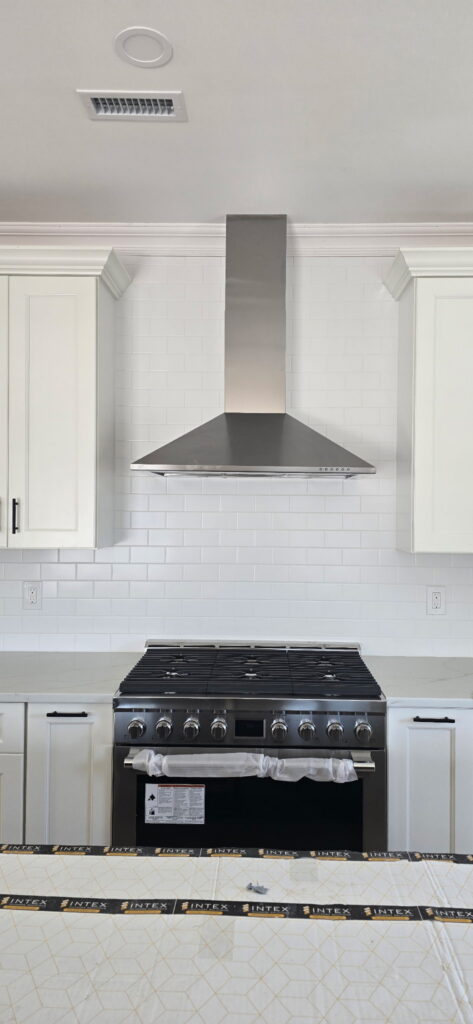
Cooking releases smoke, grease, steam, and gas byproducts into your kitchen air. A properly installed range hood pulls these contaminants outside before they spread through your home.
Many homeowners install a new hood during a remodel without checking if the ventilation behind it works correctly. That oversight can lead to poor indoor air quality, lingering odors, and even moisture damage over time.
Why Range Hood Ventilation Matters
A range hood does more than remove cooking smells. It clears airborne grease particles that settle on cabinets and walls. It also vents excess humidity that can lead to mold growth near your stove. For gas ranges, proper ventilation removes combustion byproducts like carbon monoxide and nitrogen dioxide. These pollutants build up quickly in a closed kitchen without adequate airflow.
Good ventilation connects directly to your home’s overall indoor air quality. If you already have concerns about air purification or humidity control, our indoor air quality services page covers whole-home solutions that pair well with kitchen exhaust upgrades.
Ducted Versus Ductless Range Hoods
Not every range hood vents to the outside. Understanding the difference helps you choose the right setup for your kitchen.
Ducted Systems
Ducted hoods pull air through metal ductwork and release it outdoors, usually through an exterior wall or roof cap. This is the most effective option because it removes contaminants completely rather than filtering and recirculating them. Ducted systems work best when the duct run is short and straight, since long or bent runs reduce airflow efficiency.
Ductless Systems
Ductless hoods filter air through charcoal filters and recirculate it back into the kitchen. They work well in homes where running new ductwork is not practical, such as condos or homes with finished ceilings below. The tradeoff is reduced effectiveness, since filters only trap some particles and none of the excess heat or humidity.
Sizing Your Range Hood Correctly
Range hoods are rated by cubic feet per minute, or CFM, which measures how much air the fan moves. A general guideline calls for at least 100 CFM per foot of stove width. Homes with high-output gas ranges or large kitchens often need higher CFM ratings to clear smoke and heat effectively. An undersized hood leaves contaminants behind no matter how well it is installed.
Common Installation Mistakes
Improper installation is one of the biggest reasons range hoods underperform. Frequent issues include ducting that vents into an attic instead of outside, which traps moisture and can cause mold or rot. Long duct runs with too many bends also reduce airflow significantly. Missing or damaged exterior caps allow pests and weather into the ductwork. Undersized ducting for the hood’s CFM rating forces the fan to work harder and shortens its lifespan.
Ventilation Challenges in Older NJ Homes
Many older homes across our service area were built without dedicated kitchen exhaust ductwork. Retrofitting a ducted range hood into a home with finished walls and limited attic access takes careful planning. In some cases, a ductless system or a smaller-capacity ducted unit routed through an exterior wall makes more sense than tearing into existing framing. Homes near the shore also face added humidity and salt air exposure, which makes reliable kitchen ventilation even more valuable for protecting cabinetry and finishes.
If your home already relies on a ductless mini split system for heating and cooling, kitchen ventilation planning often follows a similar approach. Our ductless mini split and heat pump page explains how these systems work in homes without existing ductwork.
New Construction and Kitchen Remodels
New construction and full kitchen remodels offer the best opportunity to design range hood ventilation correctly from the start. Coordinating hood exhaust with your home’s overall HVAC design prevents pressure imbalances that can pull cold or humid air back into the house. A properly sized hood also needs make-up air in tightly sealed new homes, so exhausted air is replaced without straining your heating and cooling system.
We handle heat loss analysis and system sizing for new builds, which is a good time to plan kitchen ventilation alongside your primary HVAC equipment. Learn more on our new installation page.
Signs Your Current Ventilation Isn’t Working
A few warning signs suggest your range hood or ductwork needs attention. Persistent cooking odors that linger long after meals often mean weak airflow. A visible grease film on nearby cabinets or the backsplash points to poor filtration or exhaust. Condensation on kitchen windows during cooking suggests humidity is not being vented properly. Unusual fan noise or reduced suction can mean blocked or damaged ductwork.
Maintenance Tips for Long-Term Performance
Range hood filters need regular cleaning to keep airflow strong, especially in households that cook frequently. Ducted systems should have their exterior vent caps checked yearly for blockages from debris or nesting insects. Charcoal filters in ductless systems need periodic replacement since they lose effectiveness over time. Pairing this with routine HVAC upkeep helps protect your entire home’s air quality. Our preventative maintenance plans can help you stay ahead of these small issues before they become bigger problems.
Frequently Asked Questions
Basic hood replacement is possible for some homeowners, but proper venting to the exterior often requires cutting through walls, roofs, or siding. Incorrect installation can lead to moisture damage or fire hazards, so professional installation is recommended for ducted systems.
Many NJ municipalities require permits for new ductwork or exterior penetrations. A licensed contractor can confirm local requirements before starting work.
Most manufacturers recommend cleaning metal mesh filters monthly and replacing charcoal filters every six months, depending on cooking frequency.
Gas ranges typically need higher CFM than electric, often starting around 400 CFM for standard residential cooktops, with higher output ranges needing more.
Get Expert Help With Your NJ Kitchen Ventilation
Proper range hood installation protects your air quality, your cabinetry, and your home’s structure. Planning a remodel or fixing a hood that never vented correctly both call for the same careful approach. All Air Systems Heating and Cooling has served Monmouth, Ocean, and Middlesex County homeowners since 1995, with the licensed expertise to handle ventilation projects tied to your broader HVAC needs.